
Share Keiko Pederson's obituary with others.
Invite friends and family to read the obituary and add memories.
Stay updated
We'll notify you when service details or new memories are added.
You're now following this obituary
We'll email you when there are updates.
Select your format and elements to print

IN LOVING MEMORY OF Keiko Pederson
Keiko
Pederson
Oct 29, 1933 — Sep 11, 2020
Grand Forks
Keiko Pederson's Obituary
Keiko Pederson, 86, of Grand Forks, ND passed away Friday, September 11, 2020 in Valley Senior Living in Grand Forks.
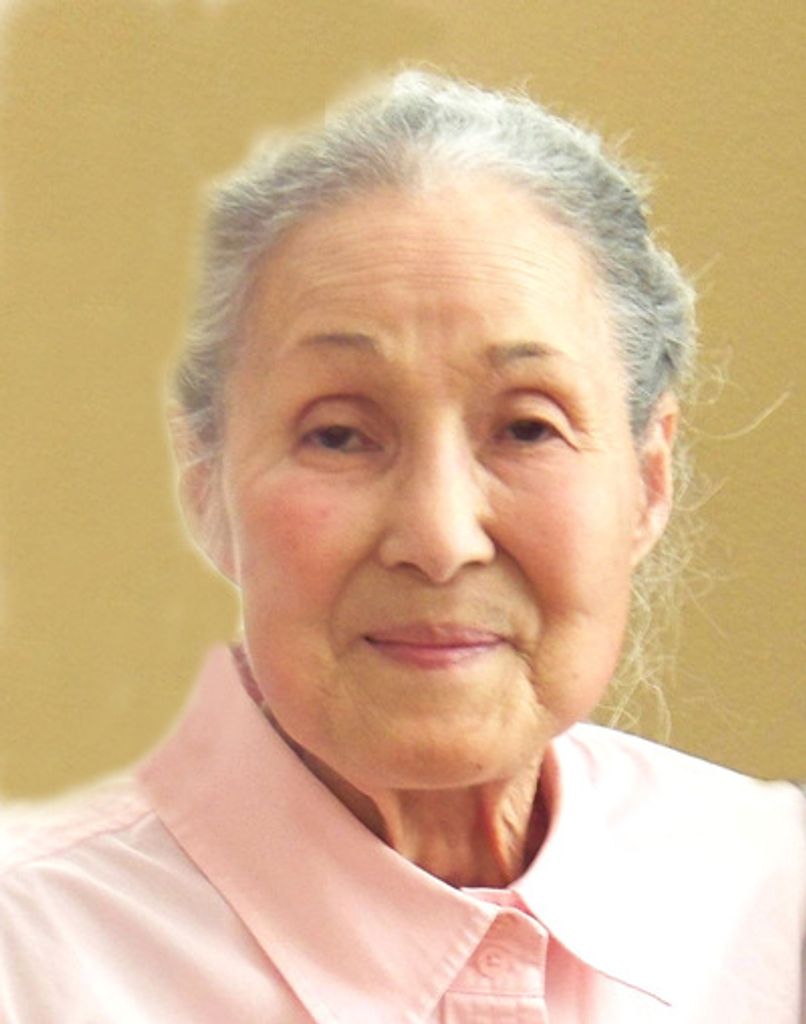
Keiko Pederson is a ninety pound, four-foot eight-inch Japanese woman. She has light skin, and now has long, straight grey hair. She keeps her hair bundled up beneath a handkerchief when she leaves the house. She can be found picking weeds in her yard, walking to Hugo's, shuffling to K-Mart, or strutting to the bank in order to keep track of her funds. She enjoys telling people her stories, laughing, and smiling. Every day she writes in a small journal about her daily activities. She writes in her native Japanese in an effort to retain her culture. This is a reflection of Keiko's life thus far.
Keiko Yamaguchi was born on October 29, 1933 in Kobe, Japan. Kobe, located in the southern portion of the country, is the sixth largest city in Japan. Keiko lived there for eight years with her parents and three sisters. Their family rented a small, quaint house, one of five or six similar houses that lined the streets. Growing up, she never had a plethora of toys, games, or other play-things to enjoy. "I play paper doll. That's all I got paper doll," she recalls nearly seventy years later. She, her sisters, and many other girls at the time all made their own paper dolls. They designed paper clothes for their paper dolls, as well. "Not many girls got beautiful doll like Barbie doll," she emphasizes.
After Japan's attack on Pearl Harbor on December 7, 1941, all major cities in Japan faced fears of being bombed by the United States. Kobe was a possible target. As a result, the Yamaguchi family fled the city. She and her family members first lived on her grandfather's farmstead just outside the city.
"It was a big farm. He grow watermelon size of basketball, cucumber, tomatoes, lots of rice, and [melons]," she recalls. "My grandpa he had cows, too, for milk. Lots of chickens run around, too. I 'member my dad catch chicken and cut up for kids to eat. I don't eat it. I don't like chicken," she laughs. The house she lived in was a typical farm house. "It's not like my house today," she says. Her favorite memory of the farm involves her grandpa's watermelons. She and her cousin liked to run to the watermelon field; cut open the watermelons; eat the fruity innards; then reassemble the shell and place it back in the field. "Grandpa he would bring watermelon to market and boy would he be surprise," Keiko laughs.
Shortly after, they relocated to a small town about one hour away from Kobe. It rested on the side of a small mountain. On this mountain the family would wait out World War II. This house is where Keiko experienced her first pet. He was a dog named Bell. "He was a medium one," Keiko says about her dog.
One night after a girls' night out to the movies, Keiko's mother brought her daughters to a fortune teller. Keiko, ten years old at the time, remembers the event vividly. "[The fortune teller] wear pretty kimono and had a long white beard," she says as she strokes her imaginary beard. "He sit at a long little desk outside." Illuminating his desk were paper lanterns. "He say I would go far, far away. I don't believe him. I'm only ten years old. I never think about coming here [to the United States]." The man also predicted she would almost die from a sickness in her neck, and that she would have an excellent boy one day. Keiko left the fortune teller in disbelief. After all, how could he predict all that by reading a palm?
Japan had established a warning system for its residents during the war. The system consisted of a series of sirens to alert residents of a possible threat. Bomb shelters were built for them to take refuge. Keiko remembers the sirens going off rather frequently. Once the alarms sounded the citizens turned off all light sources. Next they bolted to the shelters. Occasionally, parents were separated from their children in the mad rush of traffic. Keiko experienced just that on one particular night; she accidentally lost her family. She suffered in agony of fear amongst strangers while the city of Kobe awaited its fate. No such bombing occurred that night, however. She was later rejoined with her family once the sirens silenced. The Yamaguchi family returned home, and they went to sleep.
On the night of March 17, 1945, however, Kobe would not be so lucky. The United States sent a fleet of B-29 airplanes to bomb the city. Keiko still remembers the screams of the sirens that dark and sorrowful night. People turned off lights and scurried to nearby bomb shelters. All they could do next was wait in the darkness. Not long after, Keiko recalls the booming roar of planes flying overhead. Explosions boomed. Bombs were felt. She immediately knew her hometown was under attack. She could do nothing but wait out the storm. Once the warnings subsided, residents poured out of the shelters. Everyone wanted to see the fate of Kobe. Keiko, only twelve years old, saw her city from the little mountain town. It was engulfed in flames. Was her home destroyed? 331 planes destroyed nearly one-quarter of the city that night. 8,841 people were killed. More than 1.5 million homes were damaged or destroyed. This attack was the first of two suffered by Kobe in 1945. The results of the second firebombing were much like those of the first.
World War II was brought to a close with the surrender of the Japanese in August of 1945. Keiko's family moved back to Kobe only to find their home destroyed. Her grandfather took the family in once again. Living on a farm proved to be very beneficial at this time. After a series of bombings devastated Japan, food became very scarce. As a result, many went hungry. Keiko's family remained sheltered, well-fed, and content. They fared better than most.
With Japanese life gaining back its normalcy, Keiko was able to concentrate more on her schooling. "I go school eleven months a year," she recalls. Her summer "vacation" consisted of the month of August. "That's all," she says with a smile. During her educational career, she had always been a straight "A" student. "What else things to do [besides study]," she asks. Classrooms contained around fifty students each. Keiko was always the top second or third student in her classes. "One girl, I still remember her name, no matter what I just can't beat her no matter how much I study," Keiko says with disbelief. "But we play together," she continues spiritedly.
Over the next several years Keiko's parents worked hard in order to recover from their losses. Her father was a fireman. He was high-ranking, and could have been chief. Unfortunately, he never received proper schooling for that position and was unable to obtain it. He held the job for approximately thirty years. Her mother worked out of the home teaching others how to knit.
Once Keiko completed her regular schooling, she decided to enroll in a beauty school. She quickly discovered she didn't enjoy working with the customers. Some were extraordinarily particular, she remembers. Instead, she started working at a snack bar part-time. This is where she encountered her future husband.
James Pederson was on a temporary leave while serving during the Korean War. Stationed in Korea, he chose to visit Japan. While in Kobe he happened to stumble across Keiko working at a small snack bar in the street. Through the use of English-Japanese translation books, the two immediately hit it off. Jimmy, as Keiko calls him, remained in Kobe for ten days before departing back to Korea. After serving his time in the military James returned to the United States. He quickly flew back to Japan to ask for Keiko's hand in marriage. She said yes. "That's all," she comments. "Nothing to get so excite about it."
The couple was married on January 18, 1957. Keiko was 24 years old. The marriage took place at the American Embassy in Kobe, Japan. Following their marriage, James returned to the United States. He promptly flew to his hometown in Grand Forks, North Dakota. A very extensive system of paperwork kept Keiko from coming to America with him. When the marriage paperwork was completed and her immigration papers were finalized Keiko boarded a plane for Washington. On May 2, 1957, four months after their marriage, she met up with Jimmy in Seattle. For six weeks they lived in Washington. James found a job working for Boeing where he built airplanes.
After six weeks of marriage James received a phone call from his parents. They begged him and his new bride to return to Grand Forks. With no opposing arguments, Keiko and Jimmy chose to travel to North Dakota. Mr. and Mrs. Pederson arrived in Grand Forks on June 20, 1957. This is where the newlyweds finally planted their roots. This particular day, however, became a famous day in North Dakota history- not because Keiko moved to the state, but because an F5 tornado swept through the city of Fargo that evening.
Keiko and Jimmy bought a small house in Grand Forks. Keiko was introduced to her husband's parents. Everybody loved Keiko. Likewise, she enjoyed their company. "[Jimmy], his mom, his daddy they really nice. They really nice people so I never have problem," she says about her first impressions of living in the United States.
Eleanor May Pederson was Jimmy's mother. "Oh she's a nice lady," Keiko says with endearment. "She's a really nice lady. I love her." Eleanor and her husband, Earl Pederson, owned a small restaurant in downtown Grand Forks. The Cup Café was located near Central High School. "Oh he's really nice, too. [Earl and Eleanor] work really hard in restaurant," Keiko remembers. Once Earl (James's step father) and Eleanor saved enough money, they bought a brand new house. This is where Keiko spent the majority of her time. It is where she learned English, and it is where she cared for her future children.
One year after their move to Grand Forks, Keiko gave birth to a little girl. Amelia Kay Pederson was born on September 16, 1958. They were incredibly happy. Seven months after her birth, however, Keiko became ill. Doctors discovered a thyroid surgery was necessary. The procedure was not considered high-risk. Unfortunately, complications occurred while Keiko lay on the operating table. Her heart stopped beating. She slipped away. She still remembers the incident vividly.
As Keiko recalls, she was suddenly brought to a very dark room. The room contained no windows or lights. There were only a large wooden chair and a large wooden door by which she stood. Out of nowhere a deep, booming voice demanded her to sit in the chair. "Go on. Take a seat," the voice commanded. Keiko refused. Something didn't seem right. She knew it wasn't God who was talking to her. Was it the Devil?
"So I just hang on door knob and I don't go in. And that's why I stay alive. That's all. After that I just flying top of that flower garden. That's all," she explains further. She abruptly found herself flying above a small, yet astonishingly beautiful garden. She doesn't recollect how she got there. She only remembers flying, just like a bird, over the colorful garden. This flight was brief, fortunately. She quickly found herself back on the operating table. She felt very cold. When she questioned the doctor he said Keiko had a tremendous fever and he had to ice her entire body. The doctor had never been so scared in his life, he said. Keiko's seventh month old daughter lingered in the waiting room with her grandmother, unaware of what happened. Today, Keiko believes God pulled her out of that dreary room, and then sent her back to Earth.
After dying, Keiko's operation went well. She remained in the hospital for three or four weeks while she healed. While trapped in her hospital bed, her mother-in-law brought Keiko strawberries, sugar, and cream as a treat. She did this every day. In addition to the strawberries, Keiko consumed chicken noodle soup. She has never been fond of "American" food, such as meat and potatoes. She doesn't even like chicken or fish, both typical foods in Japan. She prefers to eat fruits, vegetables, and rice.
Nearly two years after the birth of their daughter, the couple had a son. Steven Duane Pederson was born on April 28, 1960. Once again, the family was overcome with joy. Earl, excited to have a grandson, said, "Thank you" three times when he entered Keiko's hospital room. He then stepped out for a moment, returned, and said, "Thank you" three more times before leaving. Now with two young children in the house, a working husband, and a lack of understanding of the native tongue, Keiko graciously accepted the assistance of Jimmy's mother in her day-to-day routine. Eleanor helped Keiko raise the two children. She also taught Keiko how to read, speak, and write in English. Keiko remembers sitting in the tree's shade in the backyard, and her mother-in-law instructed her while the kids slept.
Earl, often found sitting at the bar in Whitey's Café in East Grand Forks, bragged to others about his wonderful grandchildren. "Steven and Amelia are so smart," he gloated. Earl was particularly fond of Amelia, however, and spoke most highly of her.
In the early part of 1965, Keiko decided to fly back to Japan. Homesick, she wanted to visit her family. Pregnant with her third child, she boarded a plane and headed to Japan. She lived with her sisters in Kobe for two or three months. Back in her new home, Jimmy worked, and Jimmy's parents watched after Amelia and Steve. Shortly after returning to America, Keiko gave birth to her third child.
Gail May Pederson was born in July of 1965. Sadly, she died only two days after her birth. "I not too sad, though. I don't even know her," Keiko adds. Keiko never saw her daughter's face. Doctors took Gail away, and she died two days later in the hospital without ever being held by her mother or father. Gail is buried in a Grand Forks cemetery.
The following twenty years of Keiko's life were spent caring for her children, cooking, learning English, and discovering the American way of life. Nearly every day was identical. However, in order to mix things up a bit, the family decided to get a dog when Steven turned five. Keiko loves dogs. She always has. James found a man selling a batch of black toy poodles. The dog, who Keiko named Cuddles, cost Jimmy 150 dollars. That was quite a large sum in those days. Immediately after paying the seller, Cuddles ran from his new owners. He made a run for the river for some reason. Jimmy caught him and brought his new pet home.
For thirteen years the family enjoyed Cuddles. He was a great dog, Keiko remembers. "I remember Steven just hold that little Cuddle in his lap. It was so cute," she says with glee. Cuddles was smart, gentle, and very nice. Unfortunately the dog had to be put to sleep in his later years due to old age. Keiko became so sad. In an attempt to make his mother happy again, Steven bought her a new dog. This dog, although not 100% poodle, looked very similar to Cuddles. As a result, Keiko named this dog Cuddles. This dog, however, was nothing like the first.
"Second Cuddle he's a mean. Boy he's a mean one. First day he bit my hand," Keiko laughs. "He take that bone on top of couch. I told him no bone on that couch and I take away. He bit my hand and that hurt." The family quickly discovered Cuddles liked to bite.
"It's a good dog, but people scare of him," she continues. "If that dog mad he bite." Keiko often warned the neighborhood boys to stay away from her house when the dog was out. "It's a good dog but it's a vicious dog," she adds.
This Cuddles also lived to be thirteen years old. After the pet passed, Keiko became open of her true feelings toward him. She wanted desperately to get rid of the dog, and her husband did, too. They couldn't get rid of him, though. Their son had bought them the dog. They didn't want to make Steven feel bad.
It was during the life of the second Cuddles when Keiko applied for and received her first full-time job. She began working at Simplot, a local potato processing factory in Grand Forks, in the summer of 1980. She peeled and sorted potatoes eight hours a day. Keiko has never driven any type of vehicle. She relied on others, either Jimmy or coworkers, to drive her to and from work. Fortunately, she never encountered any problems with this arrangement.
While working for Simplot, Keiko had a freak muscle spasm in her back. On Valentine's Day in the early 1980s, Keiko suddenly experienced a painful jolt in her back while at work. She couldn't move. As a result, she was forced to lie in bed at home for one month. This, according to her, was the most difficult thing she's had to do in her life. Up until this point, she had never missed a day of work. "I never late, eithers," she adds. "Never late and I never miss work. Except for one month I got muscle spasm and I can't get up so I miss one month."
Keiko's mother-in-law died in 1984 from natural causes. Keiko was very upset. "Some people can't get along with mother-in-law you know. But she really nice to me, Amelia, and Steven. I miss her," Keiko reflects.
A year or two prior to Eleanor's death, Earl Pederson suffered from a severe stroke. Since his stroke, Earl could only utter three specific words- "Shit" and "God damnit". For whatever reason, those were the only words that ever left his mouth from his stroke until his death in 1989. Keiko and Jimmy visited him frequently. In Earl's later years, he lived in a nursing home. No matter what anybody said to him, Earl's only response was either "Shit," or "God damnit."
"That's is funny," Keiko chuckles.
Amelia married Doug Sebenaler on July 1, 1988 in Grand Forks. Steven married his wife, Pam Kessler in her hometown of Stanton, North Dakota in 1989. Doug and Amelia remained living in Grand Forks. Amelia obtained the house from her grandmother after her death. As a result, Doug and Amelia lived in the house from 1989 to 1992. Prior to that, Steve lived in the house. After his marriage, however, he and his wife moved to Warroad, Minnesota. The couple eventually moved to Minneapolis, Minnesota.
Keiko's first grandchild was born on March 14, 1990. Amelia gave birth to a boy named David Douglas Sebenaler, and she loved to spoil him. Every time "Grandma Keiko" visited me she handed out candy. She also had me over at her house for sleepovers. Keiko would make her famous "rice balls" for me to eat. Those were my favorite, a baseball-sized ball of white rice. Jimmy and Keiko often told stories about their lives growing up. Keiko frequently spoke of Japan, and Jimmy liked talking about sports, news, and fishing.
Two years after my birth, Doug and Amelia bought a new house. Keiko moved into the house, and it was only a few blocks from Amelia's new home. It was a perfect setup for a grandmother looking to spend time with her grandchildren.
Three years after my birth, Amelia and her husband had a daughter whom I named Sarah. Keiko spoiled her, as well. The two also spent a lot of time together. Sarah stayed at Keiko's house whenever she became too sick to go to school or daycare. Keiko took care of her.
On January 17, 1995, a major earthquake erupted beneath Keiko's hometown, Kobe. The Great Hanshin earthquake killed 4,600 of Kobe's 1.5 million residents. It was measured at 6.8 on the Moment magnitude scale. The quake caused an estimated $102.5 billion in damage. In the spring of 1995, Keiko and her son flew back to Japan. Keiko wanted to be sure her three sisters were unharmed. She and Steven visited the Yamaguchi sisters. Keiko also showed her son the Japanese way of life, their architecture, churches, and tourist destinations. As bills and receipts of the trip began entering Keiko's hands, she became shocked by how expensive Japan had become. Products, especially produce, were several times more expensive in Japan than in the United States of America.
One year after visiting her family, Keiko decided to retire Their family lived off Jimmy's salary since 1957. In his later years, he worked at UND in the maintenance department. He held the position for twenty years. He maintained the Memorial Union.
Jimmy retired from UND in 2000. Later, he suffered from two strokes that left him nearly paralyzed on his right side. Keiko took care of him. She cooked for him, bathed him, and shopped for him. He could still walk and do simple tasks, such as mowing the lawn. Jimmy watched a lot of television in his later years. His favorite channel was CNN.
On March 23, 2000, Keiko received another grandchild. Pam Pederson gave birth to a girl. Her name is Meghan Keiko Pederson. Keiko was so happy to have yet another grandchild to spoil. Unfortunately for Meghan, her parents decided to move to Minneapolis quickly following her birth.
On the night of December 8, 2004, Amelia and I brought a new pair of shoes over to Jimmy. Amelia told her father to try the shoes on. He snapped at her, telling her he didn't like them. Keiko had never heard him shout during their nearly fifty years of marriage. "Oh, Jimmy," she scolded him. Something was wrong. He hadn't been feeling well, so Amelia and Keiko brought him to Altru Hospital in Grand Forks. Doctors diagnosed him with kidney failure. A result of kidney failure is swelling of the feet and ankles. This is why Jimmy didn't want to put the shoes on the previous night. His feet were nearly purple, and he hated hospitals. On his way to the hospital bed, he told Amelia to keep him alive no matter what. Use the defibrillator if necessary, he said.
Keiko stayed with Jimmy every day he remained in the hospital. The nurses gave her a bed to sleep in next to her husband. My mother and I visited nearly every day, as well. Jimmy's son, Steven, drove up from Minneapolis, Minnesota to visit his father for several days. Unfortunately, Jimmy progressively became worse. His organs and heart began to fail. A breathing tube had to be inserted into his throat, and he had to be put into a drug induced coma. After three days in a comatose state and no improvements, doctors suggested waking him up to see if he responded. Keiko and Amelia agreed. Doctors cut off the medication. Soon after, the doctor discovered Jimmy suffered from multiple strokes while he was out. He would never wake up. Keiko and Amelia agreed it was best to let him go. He was in pain, and no treatment in the world could wake him up. On December 17, 2004 nurses shut off all the machines keeping James alive. Amelia and Keiko stood by his side when he passed at 11:00 AM, pain free.
Since Jimmy's death, Keiko has been kept busy by watching television, a luxury she never took pleasure in until recent years. She enjoys watching the classics. Gunsmoke and Bonanza are her favorite programs. She has never touched a computer, never driven an automobile, and never used a DVD player or DVR. She does, however, walk several miles on a daily basis. She also enjoys playing with dogs and cooking.
Her tastes in food are simple. She drinks coffee every morning and eats a piece of toast with jelly. Come lunch time, she usually cooks a pot of rice and miso soup, a green onion-tasting soup. For supper, she usually finishes any leftovers from lunch. This is her daily routine. On occasion, however, she will mix up her habits by making curry rice, chow mein, or spaghetti. This diet is unlike any other that I know of, especially considering we live in America where people tend to over-indulge in food.
For fun, Keiko often feeds squirrels outside her door. She walks to St. Vincent de Paul (a thrift store) and buys old bread, which she uses to feed squirrels. She puts pieces of bread near the tree in her front yard and on her front porch. Keiko enjoys watching the little critters eat the bread.
Due to her old age, physical inability, and understanding of many tasks Keiko often requests help from others. I always mow her lawn, clean her gutters, shovel her sidewalks, move heavy things for her, and perform other miscellaneous jobs she can't do. She always comes to me first because if she's going to pay someone to do something, she would rather pay her grandson. For tasks I am not comfortable performing, like electrical work, she goes to her old neighbor, Jim. Whenever Jim, I, or one of her neighbors helps her with a request, she explains how grateful she is. She repetitively says, "thank you" and demonstrates her appreciation of the helper's time. Keiko always pays well, too. She usually pays either $20 or $40 per hour, depending on the task. Even when payments are rejected by the helper, Keiko insists. She often becomes angry and frustrated when someone refuses to accept payment, so I've found it's best to simply take the money and say thanks.
Disliking large crowds of people, Keiko often declines invitations to my dad's family get-togethers during the holidays. My dad has seven siblings, and all but one have children of their own. As a result, our family holidays are not small. Even though ham, one of Keiko's favorite foods, is served with Christmas dinner, she refuses to go. She would rather relax at home, alone. She never has been a fan of letter others know her business. She prefers to keep to herself. She's not so concerned about the lives of others around her unless it directly affects her. She's not concerned about government health care. She already has good health care. She doesn't care about the housing market, the unemployment rate, or the stock market. She has her own house, is retired, and doesn't believe in risking her money in the stock market. However, if one of her kids or grandkids becomes sick or hurt, there she is ready to help in any way she can. Keiko always offers food to me and my family, but she rarely donates food for charity. However, this is most likely because she seldom has nonperishable foods in her cabinets.
Today, at the age of 76, Keiko has no regrets in life. She wouldn't have done anything any other way. She does admit, though, that she desperately wanted to return home during her first ten years in the United States. "Homesick," she says. "Not anymore. My mom and dad dies so not anymore." She is currently living in the first house she entered when she moved to Grand Forks. She lives in the house her in-laws bought when Jimmy was a young boy. She cooks in the same kitchen her mother-in-law did during their Thanksgiving gatherings. Her grandson maintains the house, the very house his grandfather was raised in.
Keiko would like to visit Japan again before she dies. She wants very badly to see her sisters again. Unfortunately, she feels it will be too much work for her. She is also concerned about the new Swine flu. "But I like to go," she adds regretfully.
Keiko hasn't chosen a religion. Growing up, she was taught Buddhism. "I don't believe Buddha anymore," she says now. "But I believe in God. I don't go church. I don't believe nothing, but I knows God here. I know he there. I don't do nothing bad."
Keiko is thankful for many things these days. She is thankful she lives comfortable, thankful she has been blessed with two good kids and three good grandkids. "I got health. That's is most important," she continues. "I still can walk 'bout two, three miles day or more," she laughs. "I go see doctors 'bout once year for checkup. That's it. Every morning I say thank you God. I really do. I guess that's all."
Keiko is survived by her daughter, Amelia (Douglas) Sebenaler, Grand Forks, ND; her son, Steven (Pam) Pederson, Blaine, MN; her grandchildren, David, Sarah and Meghan; her great-grandchildren, Carter and Mckenna and a cousin, Renee (Tom) Barnhart, Fargo, ND.
She was preceded in death by her parents; her husband, James; her sisters, Tomiko, Yoshiko and Yoko, and her infant daughter Gail.
A Private Funeral Service:
Will be held in the Historic Norman Funeral Home Chapel.
Burial:
Memorial Park South Cemetery, Grand Forks, ND.
Funeral Services for Keiko Pederson
Private Funeral Service
Historic Norman Funeral Home Chapel
Keiko Pederson's Guestbook
Visits: 0
This site is protected by reCAPTCHA and the
Google Privacy Policy and Terms of Service apply.
Service map data © OpenStreetMap contributors